
How to Safely Ventilate a Room if You Have a Small Child at Home
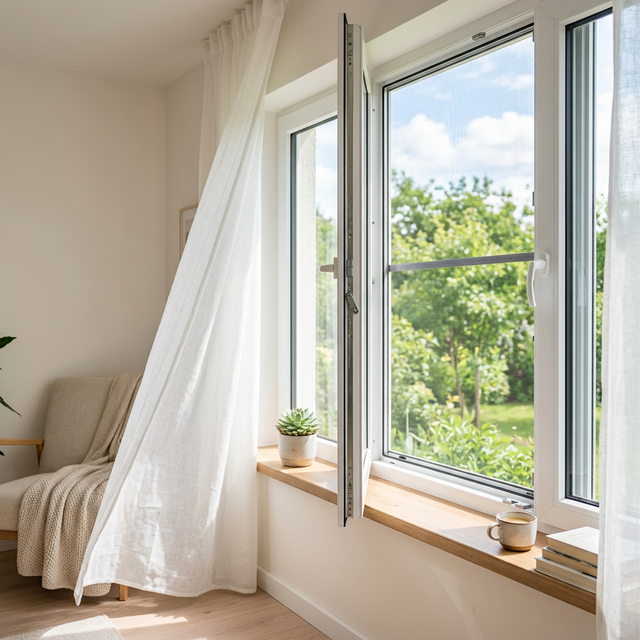
Keeping fresh air and children's health: micro-ventilation, limiters, and special KinderSafe protective nets.
Ventilation is the key to health and good sleep. But when there is a small child in the house, a window wide open turns into a source of danger, and a closed one into a cause of stuffiness and poor health. How to find the middle ground and ensure the flow of fresh air without risk to life?
Micro-ventilation: Pros and Cons
Micro-ventilation mode (when the handle is turned 45 degrees) creates a small gap. This is safe, as a child cannot stick even a finger in there. However, in hot weather or with a large number of people in the room, such ventilation is not enough for a comfortable climate.
Tilt Mode (Vertical Ventilation)
This is the most popular method. The window tilts from the top, forming a V-shaped opening. For children, this is relatively safe if they do not know how to turn the handle. But remember: for cats, this mode is deadly! Animals often try to jump out through the top gap and get stuck, which leads to tragic consequences.
Ventilating Wide Open with KinderSafe
The only way to fully ventilate a room in 5-10 minutes is to open the window completely. And this is where KinderSafe protective nets are indispensable.
- Constant protection: The mesh is always on the window. You can open the sash at any time without fearing for the child.
- Maximum air flow: Unlike inlet valves, the mesh does not limit the volume of air.
- Clean air: If you choose the Nanofiber model, the mesh will also trap street dust, pollen, and smog, which is especially important for allergy sufferers.
Safe ventilation is not a compromise between fresh air and safety. With KinderSafe, you get both in full.
Need a Consultation?
Our specialist will answer your questions and help you choose the right model.