
Why You Need Child Window Locks and How to Choose Them
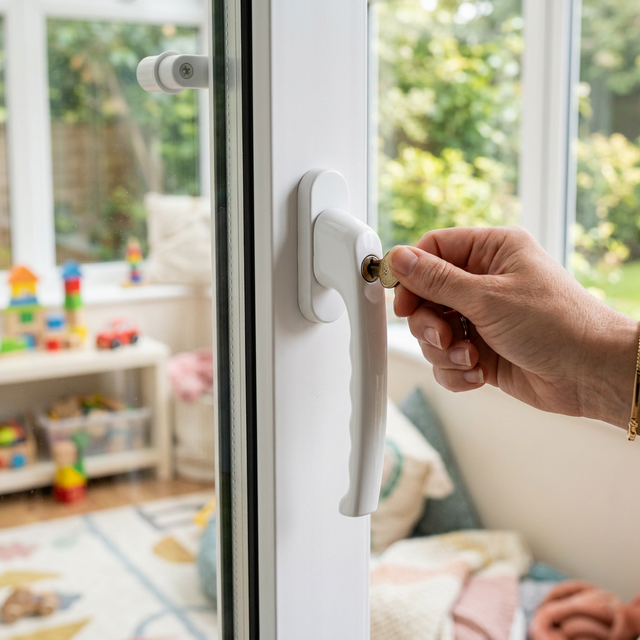
Detailed guide on types of window locks (keyed handles, cables, blockers) and why they are often not enough for full safety.
When a child appears in the house, familiar things begin to be perceived differently. Windows are one of the main risk points. The simplest and most popular solution is installing child locks. But are they really effective, and what type of lock should you choose?
Main Types of Window Locks
- Keyed Handle: A classic option. You simply replace a regular handle with a locking one. A key is needed to open the window. Con: The key must always be kept at hand but in a place inaccessible to children. Keys often get lost at the most inconvenient moment.
- Cable Limiter: Allows opening the window for ventilation to a safe distance (about 10-15 cm). Con: The cable spoils the window's appearance and can loosen over time.
- Sash Blocker: Installed at the bottom of the window and blocks only the wide opening, allowing the sash to tilt for ventilation.
Why a Lock is Often Not Enough?
Locks are a good "first line of defense." However, they have two serious limitations:
- Human Factor: You may forget to lock it or leave the key in the handle. A child will quickly figure out how to use it.
- Stuffiness: Most locks block the window completely. In hot weather, you are faced with a choice: safety or fresh air.
Conclusion: Locks work best in tandem with KinderSafe protective nets. The mesh provides a physical barrier even if you forgot to close the lock and allows for wide-open ventilation without any risk.
Need a Consultation?
Our specialist will answer your questions and help you choose the right model.